Let’s Start With the Basics
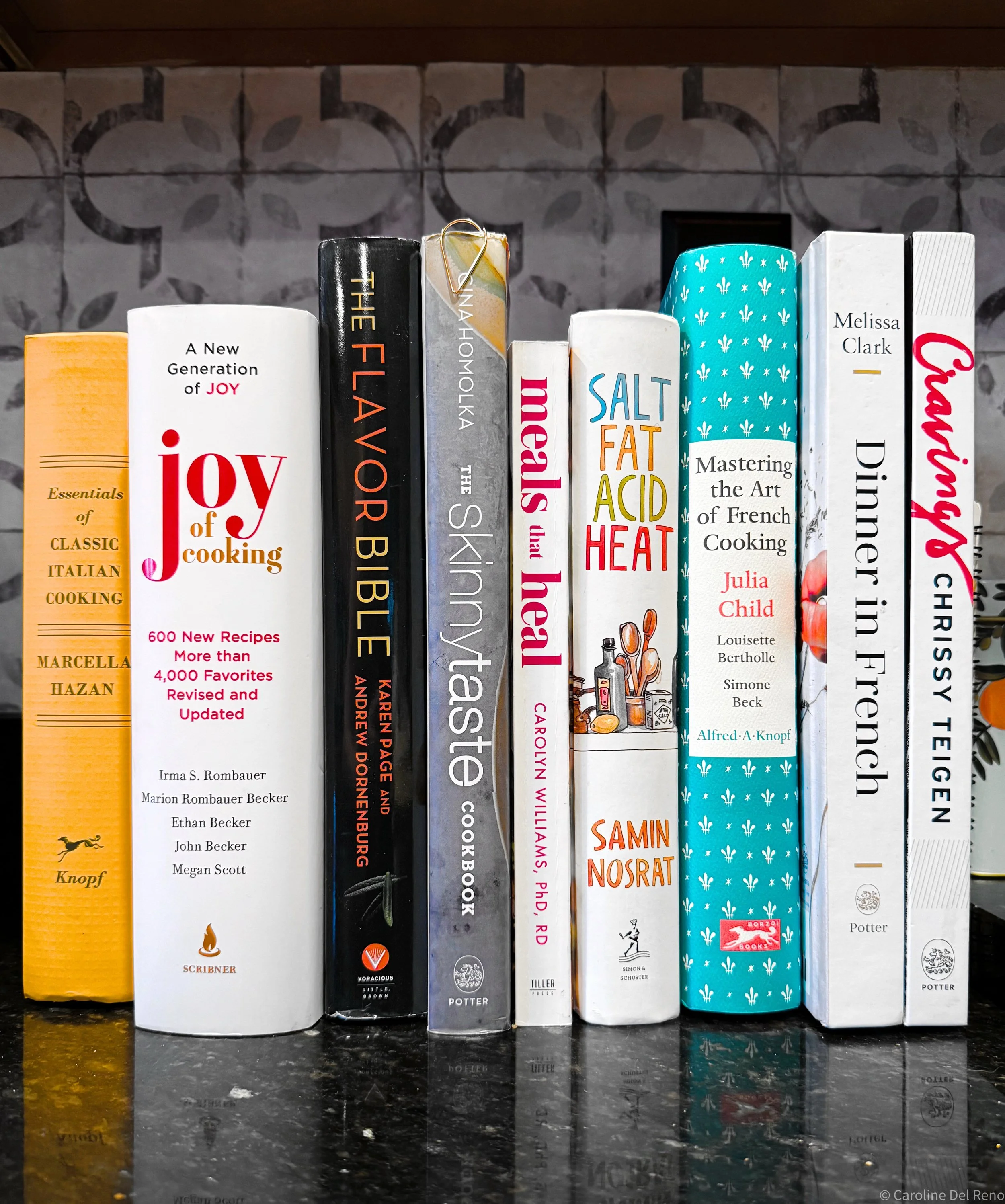
It all begins with an idea. Whether it’s a flavor, an aesthetic, or a goal to try something new, it’s always best to get back to the basics. Flavor, texture, feeling, essence.
Every dish you ever plan to concoct needs a few basic thoughts before you whip your ingredients out of the fridge. What flavor profile are you looking to develop? What ingredients do you already have available, and which do you need to head to the market for? How much time do you have, and how long is your prep/cook/clean-up going to take you?
Here’s what I recommend: carve out 30 minutes as early in the day as you can, see what ingredients are in reach, pick one specifically, and look online for inspiration. There are so many incredible online food writers and influencers these days that you will definitely be able to find inspiration with a quick 5-minute Google search (or head to the index of a particular cookbook you’re loving at the moment). I mean, you found your way here, so click through my catalog and see if any of my recipes call to you.
What’s most important is that you don’t stress yourself out with trying to make the perfect dish. Some of your attempts will be mind-blowingly good, where you sit there and say to yourself, “damn, I’m good.” Other times, you’ll be bummed out that you didn’t find that specific flavor you were imagining. GET OUT OF YOUR HEAD, and into your mouth! Your tongue speaks the oldest language of all…flavor. Learn to listen and decipher what it’s trying to tell you. Do you actually need more salt, or could your dish actually benefit from acid? Taste your way through each step. Seriously, do it, you’ll learn a lot in a short amount of time.
If you’re brand spanking new to cooking and baking, then try a whole slew of recipes (make sure they are rated rather highly by lots of people if you’re on Google). I repeat, get in there and taste as you go; you’ll quickly learn why certain ingredients work better together over others, and why you should never mix others. Above all, remember, there is a learning curve; you’re going to fail fabulously and succeed spectacularly all the time. Either way, each dish is a new experience, a new flavor, a perfect way to light your taste buds on fire (figuratively, not actually lol!)
Recommended Tools to Get You Started:
Heads Up: This post contains affiliate links—aka magical portals to products I genuinely use and love. If you click and buy, I might earn a small commission (think: enough for a fancy stick of butter or half a whisk). It won’t cost you extra, but it does help fuel my recipe testing and occasional kitchen disasters. Thanks for keeping the pantry stocked!
A good (and sharp) chef’s knife
The Classic Henckel Knife is a great go-to and completely affordable for the everyday chef. You want to invest in a good chef’s knife (and a sharpener); it will make your life in the kitchen so much better.
A tough cutting board
Don’t go plastic, get wood. I don’t know about you, but I’d much rather have wood residue find its way into my food than plastic.
An everyday saute pan
Cuisinart is a great brand at an affordable price. Don’t worry about investing in the fancy equipment until you become a pro at the simple techniques. Plus, remember what Anthony Bourdain said? A good stainless steel pan is key for building flavor.
A utensil of choice to move food in your pan
What feels good in your hand? Go to your local Target, Sur La Table, or restaurant supply store and feel each one in your hand until you find the one. Here is my current favorite. It’s lightweight and flat enough to easily flip food in the pan.
Stainless steel serving spoon
Ladel for soups, stews, and sauces
